

Where do we go from here?
Searching for inspiration and wisdom amidst the chaos of last yer.

Rather than wait for someone else to write the type of content I’d like to read, I’m challenging myself in 2026 to reposition this newsletter into a space that combines my interests at the intersection of news, politics, arts, and culture.
Each Friday before you head into the weekend, expect more:
Long-form storytelling through profiles, including a look at two new Black-owned bookstores in Bed-Stuy and one group’s efforts to prevent cultural displacement through a community land trust
Interviews with artists, policymakers, and other folks curating today’s culture and shaping life in cities across the country
Observational essays and commentary ranging from the contemporary art scene, like thoughts on the upcoming Whitney biennial, and reflections on modern politics, not unlike today’s post!
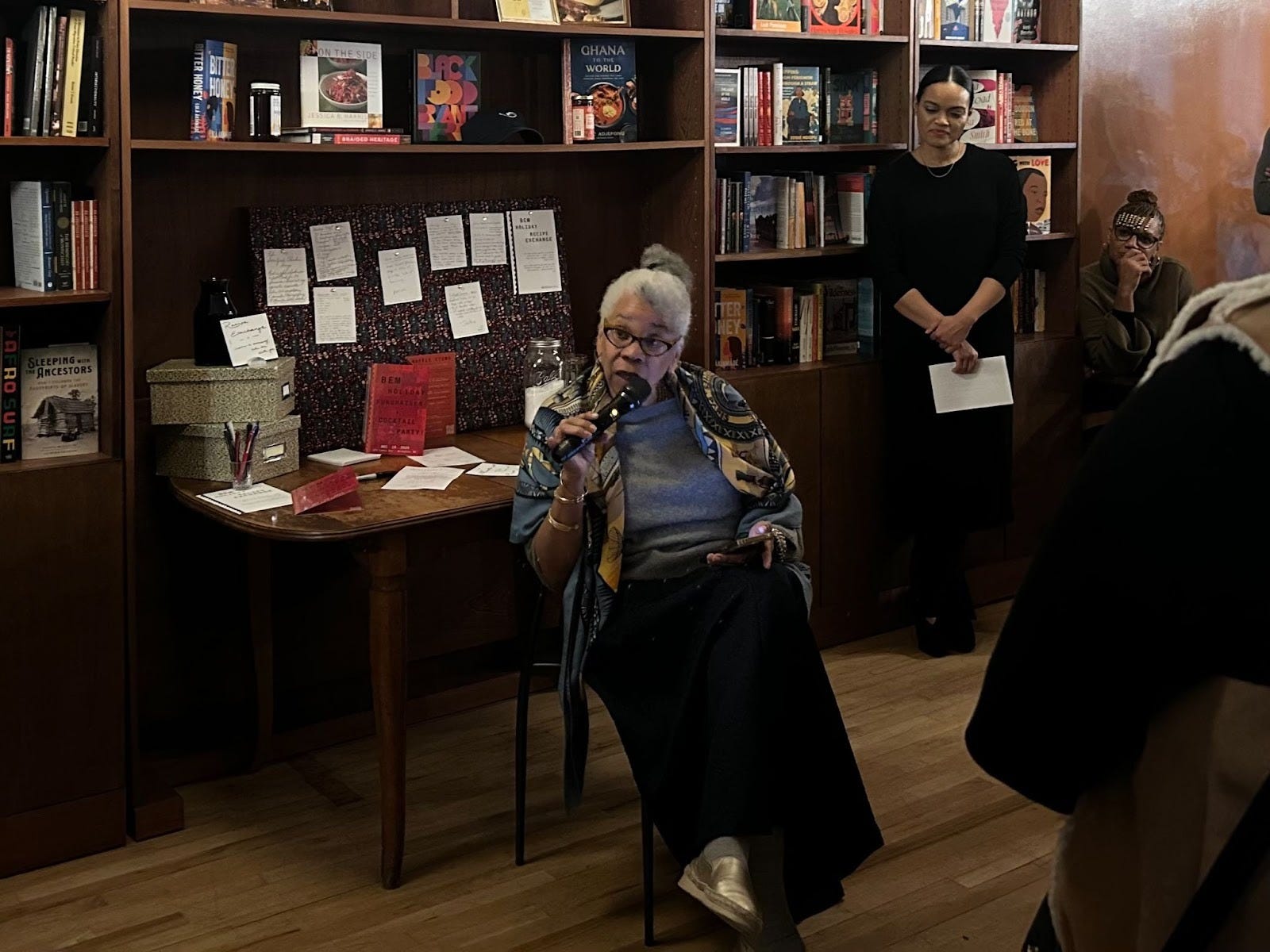
Through NOTES, I aim to create a space, both online and in-person, that empowers, inspires, and entertains other intellectually curious and creative people. More to come, but drop me a line and let me know what you think! What’s a topic that you think I should explore?
The highs and lows of 2025 are officially behind us.
Or at least that’s the quiet comfort we sit with during the first few days of a new year, as if somehow the last twelve months no longer have any bearing on who we are or hope to become over the next twelve months.
Last year was disorienting. There was DOGE and the massive restructuring of the federal government, the implications of which we have yet to understand fully. In November, we had the longest government shutdown in history. Masked men have unlawfully detained undocumented neighbors and citizens.
Amidst the chaos, there were also some bright spots. Democrats from Georgia to Seattle won big in local and statewide races. I am currently working on the transition for Detroit’s first female mayor, Mary Sheffield, where I’m supporting policy committees and organizing for community events in a few weeks. Indiana Republican lawmakers pushed back against a gerrymandered map.
2026 still has that sense that maybe we’re finally headed in a different direction, but despite this cautious optimism, anxiety still lurks just below the surface. With all this hope and fear, what comes next? To chart a course that looks toward the future, I’ve turned to the wisdom of those who came before me, including Dr. Martin Luther King, Jr., and a speech he delivered nearly sixty years ago that poses this same question:
Where do we go from here?
For King, the answer to what comes next is simple. As a nation, we must be born again and start over. We must imagine a better version of this country than the current iteration we’re presented with, though it is not enough to simply dream. We must also do the work that’s required to achieve that outcome. Delivered during the 10th annual convening of the Southern Christian Leadership Conference, King’s speech is both a testament to the wins this country achieved in the sixties and a reminder that they were meant to serve as a foundation for continued organizing, not as the final chapter.
When we think of the past as something that is finished business rather than a narrative point that’s part of a larger struggle for freedom, we risk falling into what Angela Davis describes as “historical closures.” Instead, history is something that we must constantly contest, revisit, and engage with. Situating ourselves within a continuum that looks at the past to inform the present and plan for the future is critical for moving forward. King understood the importance of contextualizing the current moment by connecting the present to the past. He references the three-fifths clause, where enslaved people were not viewed as fully human, and draws a similar comparison to how Black bodies are still disproportionately devalued, highlighting racial disparities in Vietnam War fatalities.
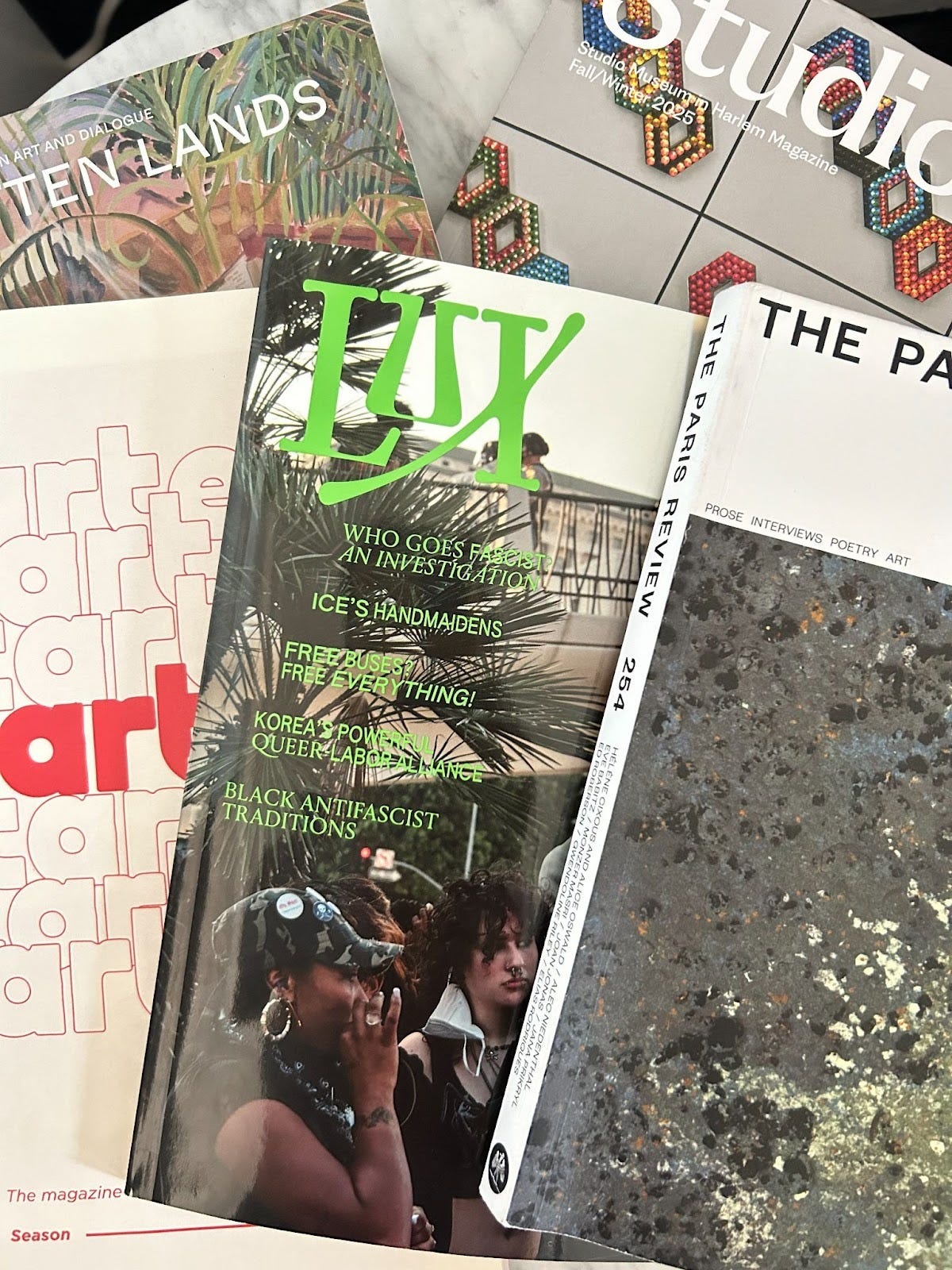
It is only by knowing where we’ve come that we can then turn our attention to a type of self-care that acknowledges our individual and collective trauma. King argues that prioritizing one’s dignity and personhood is essential in renewing our strength to continue the “confrontation between the forces of power demanding change and the forces of power dedicated to preserving the status quo.”
Today, we talk about this fraught moment as if the entire history of this country wasn’t defined by violence. Some even choose to distance themselves from the action to “protect our peace” rather than engage. However, when King and other movement leaders talk about taking a step back, it’s not to fill one’s time with the 1960s equivalent of rotting ( what would be what, dropping acid? free love?) but to actively prepare for the fight ahead.
The path forward is clear. As this nation begins celebrating its 250th anniversary, we must come together, not only to socialize and celebrate but also to defend the chance to fully actualize this country’s founding principles. To be clear, it will be hard. The challenges we face are many - climate change, rising income inequality, the adoption of artificial intelligence - but these problems only appear insurmountable because we prioritize the individual over the collective.
When we come together, the impossible suddenly becomes reality.
And we only need to look at the last year as an example of what can happen when we do. A sustained boycott of Target since February 2025 has translated into shareholders losing over $20B. Neighbors and strangers have become the face of the resistance against ICE and others who are too afraid to reveal their identity as they kidnap people on the streets and in courthouses.
The sustained efforts of over 100,000 volunteers propelled an unknown candidate to victory who was barely even polling this time last year. A group of organizers, volunteers, and others who were ready to challenge the status quo helped this person shock established party gatekeepers and the mainstream media, who dismissed his campaign. That man, Zohran Mamdani, was officially sworn in as the mayor of New York City yesterday.
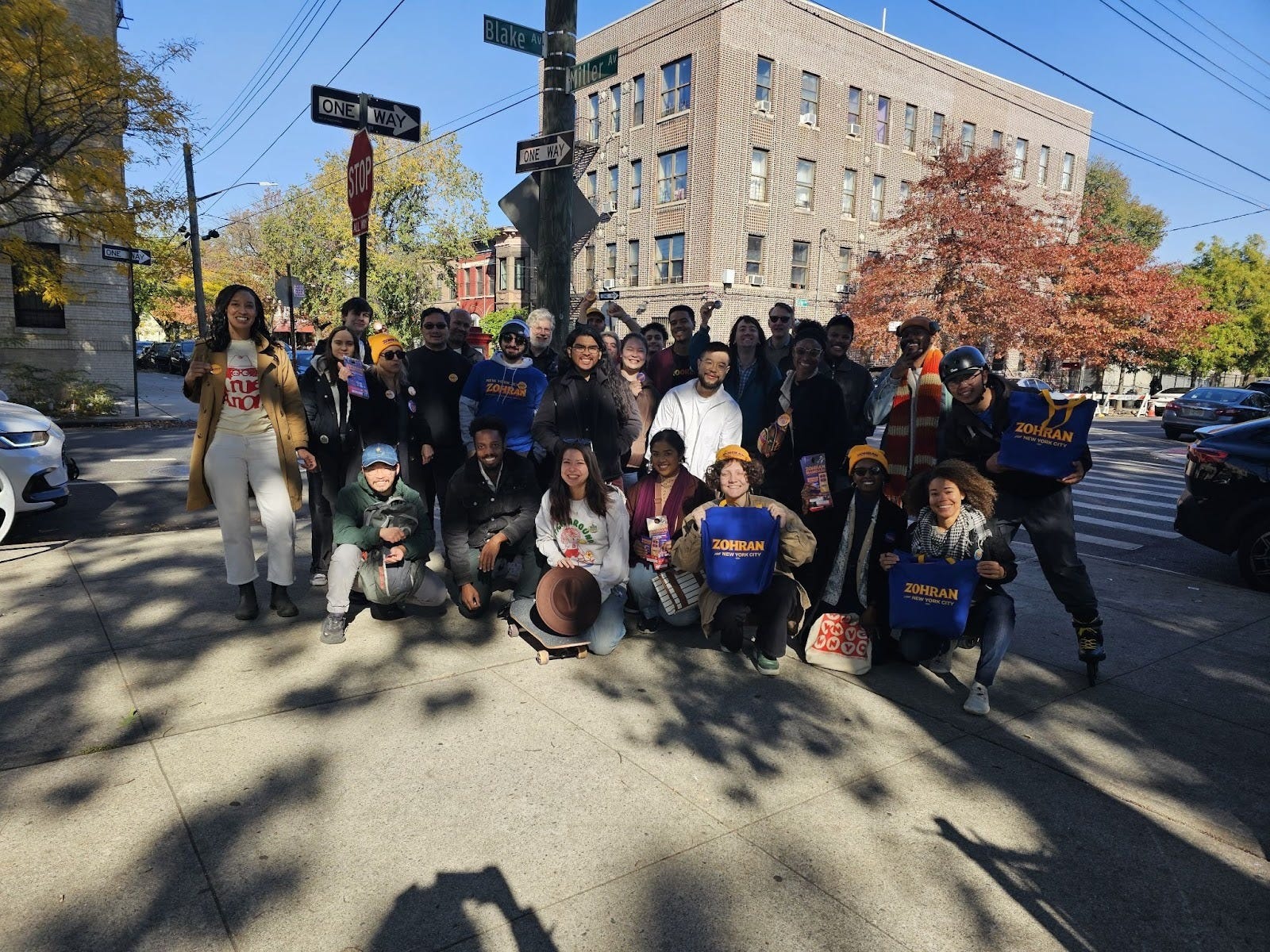
During Mamdani’s inauguration ceremony, each of the speakers - from Senator Bernie Sanders to the guest poet, Corneilius Eady - emphasized the importance of collective action and community. In what was perhaps the most emotional moment of the afternoon, public advocate Jumaane Williams broke down in tears, offering words of encouragement to his younger self before asking those in the crowd to take an oath to join hands and not let go, “because if we’re all connected, we can’t lose anyone.”
As we make our way through the coming weeks and months, I hope that each of us can reach out, grab more hands, hold on tight, and get ready to face whatever obstacles come our way - not alone, but together.
currently —
reading
An Apprenticeship, or the Book of Pleasures (Clarice Lispector) - A woman undergoes a personal transformation. Truly sublime; I wanted to underline nearly every page.
Small Rain (Garth Greenwell) - Stream of consciousness of a poet stuck in the ICU during COVID. Unlike any other reading experience I’ve had in a while.
Early Sobrieties (Michael Deagler) - Short, connected vignettes of a man couch surfing his way through Philadelphia’s gentrifying neighborhoods during his first year of sobriety.
watching
Marty Supreme (dir. Josh Safdie) - a charming anti-hero with aspirations of becoming a world champion table tennis player. Chalamet really carries the film, but I don’t think it’s enough to push him to an Oscar (though that’s not to say they aren’t trying).
Die My Love (dir. Lynne Ramsay) - The slow unraveling of a couple after the birth of their son. Strong premise, but uneven execution.
viewing
Contacts (Ken Ohara - on view at the Whitney through 2/8) - In 1974, New York-based, Tokyo-born photographer Ken Ohara started a visual chain letter using a pre-loaded camera. Participants were asked to take a photo of themselves and their loved ones. The result - intimate, candid, and staged shots from all walks of life across the country.
She’s the lover who is fearless because she knows she’ll have it all again.
- Clarice Lispector (An Apprenticeship)
Have a great weekend! And let me know what you think! What’s a political or cultural topic that you think I should explore that you’d want to read?
xx,
kayla